




Complete Guide To Self-adhesive Label Adhesives
 Apr 18, 2025|
In today's era of a wide range of commodities and a complex and diverse supply chain, self-adhesive labels, as an important carrier of product information, its importance is self-evident. From small food packaging, to large-scale machinery and equipment identification, self-adhesive labels are everywhere. Among them, the adhesive plays a key role, which directly determines whether the label can be firmly attached to the surface of the product to achieve its function. In this article, we will explore all aspects of self-adhesive labels adhesive, to help you fully understand and make the right choice.
1. What are self-adhesive labels
Self-adhesive labels, also known as sticky labels, are characterised by a layer of coated adhesive. With this layer of adhesive, the label can be easily attached to the surface of various objects, such as product packaging, containers and so on. Pressure sensitive labels (PS labels) are common types of self-adhesive labels in which the adhesive does not need to be activated by solvents or heat, but only needs to be applied with a certain amount of pressure to adhere firmly to the target surface. In the label converting industry, three main types of adhesives are used: permanent adhesives, removable adhesives and repositionable adhesives, each with its own unique properties.
2. Types of Adhesive Labels
Permanent Adhesives
Permanent adhesives, as the name suggests, are designed for long-lasting label attachment. Once this type of label is pasted in place, it will not come off easily for a long time. Permanent adhesives are great for scenarios where labels need to remain strong throughout the product's life cycle, such as product labels, shipping labels, etc. However, it is important to note that permanent adhesives, once cured, are almost impossible to remove without damaging the label or the surface to which it is applied. So, if you require flexibility in labels, you may need to consider other types of adhesives.
Removable Adhesives
The biggest advantage of removable adhesives is flexibility. Labels with this type of adhesive can be easily removed without leaving a sticky residue on the surface to which they are applied and without causing damage to the surface. This characteristic makes removable adhesives ideal for temporary labels such as promotional stickers, price tags, or in any scenario where a label needs to be removed or replaced at a later date. However, removable adhesives are not a one-size-fits-all solution. Environmental factors, such as temperature and humidity, as well as the type of surface to which they are applied, can have an impact on their performance. Therefore, it is important to test them to ensure that they work as expected before using them on a large scale.
Repositionable Adhesives
Repositionable Adhesives provide short-term removability. It allows the user to remove, reposition or reapply labels without much loss of adhesion and without leaving a residue on the surface. Infection control signs and labels often use repositionable adhesives. In scenarios where cleaning and disinfection are important infection prevention measures, labels can be easily removed, the surface cleaned and then reapplied, reducing both waste and cost. But common adhesives can not be used in all application scenarios.. For example, labels that need to withstand hot and cold temperature changes, various environmental factors, and chemical attack require special adhesives to meet performance requirements.
Specialty Adhesives
1) Low Temperature Adhesives
Low Temperature Adhesives are designed to withstand cold weather conditions and are suitable for use in cold storage, freezer and unheated warehouse scenarios. Cryogenic adhesives are essential for cold storage of pharmaceuticals, vaccines, frozen foods, and equipment that operates in harsh, cold environments. It is able to maintain adhesion at low temperatures, ensuring that the label is firmly attached to the product or equipment surface.
2) High-temperature adhesives
High-temperature adhesives are able to withstand high-temperature environments and are commonly used in consumer durables applications such as tyre labels and car battery labels. High-temperature adhesives also play an important role in healthcare, for example during autoclaving (heating at high pressure to sterilise) to ensure that labels can withstand specific high temperatures to accurately indicate whether the required sterilisation temperature has been reached.
3) Plastic Adhesives
The type of plastic adhesive will vary depending on the specific type of plastic being applied. High density polypropylene (HDPE) and polypropylene (PP) are common plastic materials used in packaging applications. They are both low surface energy plastics that require a specific chemically formulated adhesive to ensure that the label will adhere properly while remaining tacky. Plastic adhesives are also commonly used in labels for many medical devices and electronic components.
4) Tamper Resistant Adhesives
Tamper-resistant adhesives are actually acrylic adhesives that permanently bond to a variety of surfaces. As the name suggests, this adhesive makes tampering obvious when someone tries to tamper with the packaging. Tamper-resistant adhesive labels applied to food, pharmaceuticals and sterile equipment help to ensure that the package has not been opened or altered, safeguarding the safety and integrity of the product.
5) Durable Adhesives
Durable adhesives are suitable for more challenging label scenarios. For example, they adhere securely to rough and slightly oily surfaces and do not fail even when exposed to chemicals and solvents. Acrylic-based durable adhesives are both water and weather resistant, but are relatively costly. Chemical drums, as well as materials with rough surfaces, often require the use of durable adhesives to paste the label.
3. Understanding Label Materials
Label materials are varied to suit a variety of different application scenarios.
Paper Facestock
Paper facestock is the most common label material and the most widely used label material due to its low cost. It is better suited for temporary applications and for scenarios that require less durability, such as labels that are used indoors and do not come into contact with water. However, the drawbacks of paper facestock are also evident; it is not waterproof and is more prone to tearing compared to synthetic materials.
Fluorescent Paper
Fluorescent paper is another paper-based label material. Its bright, eye-catching colours are effective in highlighting important information. For example, shipping warning labels often use fluorescent paper to guide proper handling operations. Similar to regular paper, this high-grade material is produced by paper mills and has truly eye-catching fluorescent colours.
Vinyl
Vinyl works well on containers with odd shapes or small diameters, such as cosmetic containers. The material is water resistant and has a unique tactile feel that gives it a soft feel. Due to its durability, vinyl is also commonly used for label chemicals and hazardous materials.
Polyester Face stock
Polyester Facestock offers outstanding durability and remarkable resistance to UV rays, temperature, and chemicals, as well as waterproofing. While these durable properties make it a premium choice, the cost is relatively high. However, polyester facings are a good alternative for areas such as electronics, power tools, electrical equipment, and heavy machinery and equipment.
Polypropylene (BOPP)
Polypropylene labels are superior in durability to paper facestock, but not as durable as polyester face stock. The material is highly flexible, making it ideal for use in cold environments as well as application scenarios involving humid environments. It is also resistant to UV rays, chemicals and temperature. Polypropylene is a common label material widely used for label beverages, cosmetics and personal care products.
Foil and Foil-Like Materials
Foil and foil-like labels can give products a shiny, metallic sheen that attracts consumer attention and creates a more high-end look for packaging. You can often see these materials used in food packaging, cosmetics, electronics and pharmaceutical packaging.
Dissolvable Materials
Dissolvable label materials break down within minutes of being immersed in water, leaving little to no residue. However, because these materials are designed to dissolve, they are very sensitive to storage conditions. Humidity and warm environments may cause the material to yellow. Dissolvable materials are commonly used in glass and plastic containers, and are particularly useful in the food service industry.
4. Label Material Properties: How Labels Adapt to Different Conditions and Environments
Labels have different specialized properties that meet the needs of different applications and environments. From temperature-related properties to chemical resistance, these label stock properties make labels more adaptable, functional and visually appealing in a variety of application scenarios.
Temperature-Related Properties
● Heat-Resistant Labels: Designed to withstand high temperatures, these labels are suitable for applications where high temperatures are often encountered, such as industrial processes, electronics or automotive.
● Low Temperature/Freeze Labels: These labels are capable of withstanding extremely low temperatures and are widely used in medical or laboratory environments.
● High Temperature Labels: High temperature labels are used in manufacturing processes or industrial equipment that involves high heat, and are designed to ensure readability and durability of labels in harsh environments.
● Low Temperature Labels: Often used in cold storage facilities, in the food and beverage industry, or outdoors in low temperature environments.
● Temperature Indicator Labels: Designed to indicate exposure to a specific temperature threshold through visual cues or irreversible changes in appearance, they are often used for quality control and monitoring in a variety of industries.
Environmental Resilience
● Harsh Environment Label: It is a label designed to withstand extreme conditions. This includes chemical contact, abrasion and severe weather. Mainly used in industrial, automotive or outdoor applications where durability is critical.
● Outdoor Labels: To ensure longevity in outdoor environments, they are specifically designed to withstand sunlight, moisture and temperature fluctuations. They are commonly used for product branding, signage and equipment labeling.
● Indoor labels: Typically used in retail, office or warehouse environments where they are not subject to direct climatic influences. Primarily for product identification, asset tracking and general labeling needs.
Chemical Resistance
● Alcohol Resistant Labels: Used in a wide range of healthcare, hospital, laboratory and industrial environments.
● Fuel Resistant Labels: It is a durable a solution for the automotive, aircraft and aerospace and energy industries.
● Oil Resistant Labels: Designed for labeling of machinery and equipment in manufacturing and automotive environment.
● Solvent Resistant Labels: It can withstand a wide range of solvents commonly found in industrial manufacturing processes or in laboratory environments.
Tamper-resistant features
Tamper-resistant labels are designed to reveal any signs of tampering and to ensure the integrity of the product seal and packaging. If a label is tampered with, it will break or leave a visible mark.
Water Soluble Properties
Water-soluble or dissolvable labels break apart when exposed to water, making them ideal for applications such as temporary asset tracking in laboratories and manufacturing that require temporary labeling or easy removal.
Water-indicating properties
Water indicator labels are useful to help monitor environmental conditions or detect water damage, providing visual cues when applied or irreversible changes after contact with water.
Metallic Features
Metallic labels have a shiny, eye-catching look that makes brand packaging more luxurious. These labels often use materials such as foil or metallic coatings to create an awesome high-end visual effect.
5. Label Adhesives by Application Scenario
Barcode Labels
Barcode labels are essential for product identification and inventory management. Permanent acrylic adhesives are favored because of their superior durability. This type of adhesive ensures that labels remain securely attached to the product regardless of harsh conditions such as temperature changes or frequent physical handling. It has excellent adhesion to a wide range of surfaces such as paper, plastic, and metal. In addition, acrylic adhesives maintain their integrity over time without discoloration or embrittlement.
Circuit Board Labels
In applications such as electronics and industrial technology, circuit board labeling relies on permanent acrylic-based adhesives that offer excellent temperature resistance and consistently strong bonds. This helps to meet the long-term stability and reliability of electronic components and systems.
Datacom labels
Datacom labels are indispensable in telecommunications and networking. Permanent acrylic adhesive is the preferred choice for datacom labels as it ensures that the label remains intact throughout the life of the device. It reliably adheres to materials commonly found in telecom and networking environments, such as plastics, metals and cable insulation, and can withstand extreme temperatures and frequent handling.

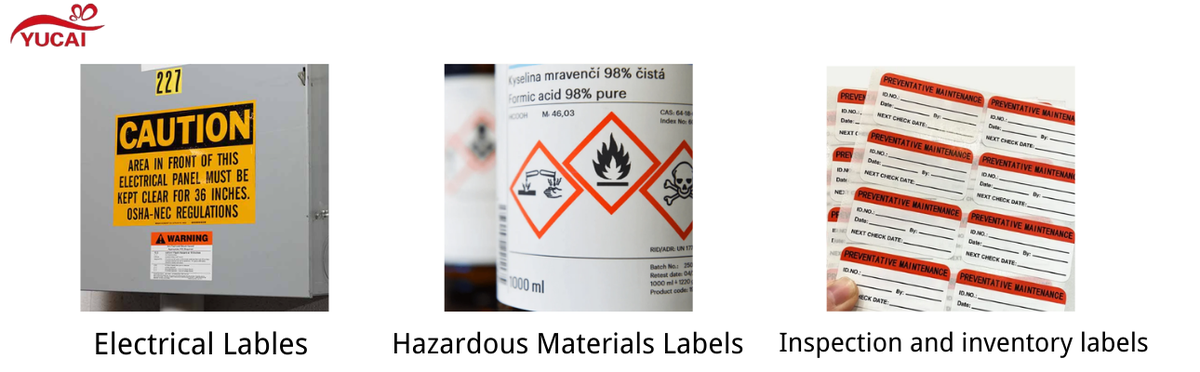
Electrical Labels
In the electrical and energy industries, permanent adhesives made of acrylic play an outstanding role in electrical labeling due to their excellent temperature resistance and long-term adhesion. It helps labels stick firmly even under harsh conditions, which is important for safety and operational efficiency.
Hazardous Materials Labels
Hazardous material labels with specific temperature-adaptive and chemical-resistant adhesives are important to ensure safety and compliance. These labels need to remain securely attached to the labeled container when exposed to varying temperatures, so adhesive materials should be selected based on specific chemical resistance requirements.
Inspection and inventory labels
For inspection and inventory labeling, acrylic labeling adhesives are often chosen by most merchants. However, depending on the requirements of the application, adhesives with different properties are better suited to meet the needs.
● Removable Adhesives: For alphanumeric and bar code applications such as electronic component marking, as well as temporary labels such as retail price tags and shelf labels.
● Permanent Adhesives: Used for equipment serial numbers and asset tags because of their long-lasting adhesive properties.
● Temperature-Specific Adhesives: Temperature-specific adhesives can withstand temperature fluctuations in laboratory and outdoor environments, and are mostly used in scenarios with large temperature fluctuations.
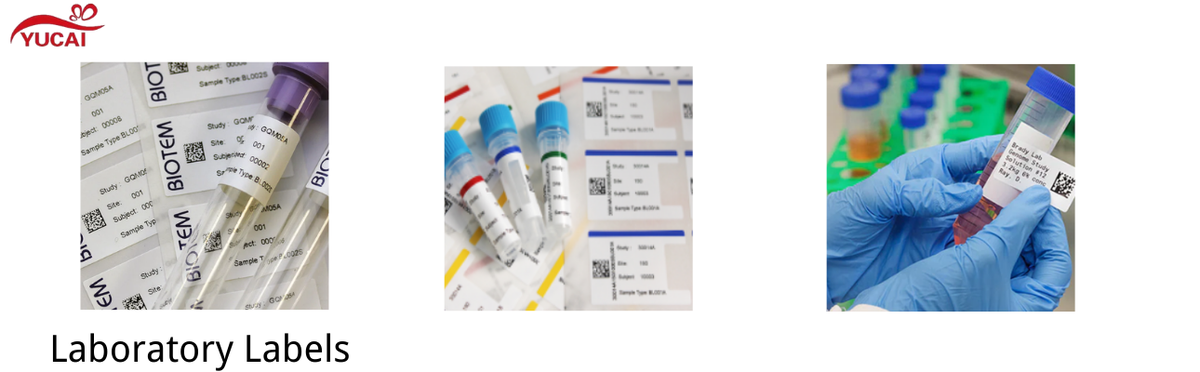
Laboratory Labels
The desired temperature range and chemical resistance determines the choice of laboratory labeling adhesive. Often, to ensure the accuracy of data and samples, the selection of temperature-specific adhesives can be effective in protecting labels that remain strong to on samples and equipment exposed to varying temperatures.
6. Considerations When Choosing a Label Adhesive
Choosing the right labeling adhesive goes beyond simply considering durability and removability; there are many more factors to consider, as listed below.
Environmental Factors
The environment affects the application and use of self-adhesive labels. Before choosing a self-adhesive consider whether the label will be exposed to extremes of temperature, humidity or chemicals? For example, if labels are to be applied to products stored in a refrigerator, consider the suitability of the adhesive for freezing environments; the adhesive needs to be able to maintain adhesion even in sub-zero environments. Similarly, outdoor labeling that is exposed to rain, sunlight, or other environmental factors needs to be considered for its waterproofing, heat resistance, and other features.
Surface Compatibility
Not all types of adhesives bond well to all kinds of surfaces, and the material and texture of the surface can affect the adhesion of the label. For example, smooth surfaces such as glass and metal are more likely to be bonded by adhesives than rough or textured surfaces such as cardboard or fabric. Fellow surfaces may be coated or otherwise treated, etc. can also affect adhesive bonding. For example, waxed surfaces or oily surfaces can affect the adhesion of labels. Therefore, to ensure that the label adhesive performs as expected the label must be tested on the actual surface to be used.
Types of Label Facestock
The face or material of the printed label can also greatly affect the durability, appearance and suitability of the label for your needs.
● Paper Facestock: Paper facestock is the most common label material and they are versatile and cost effective. They are used in applications ranging from shipping labels to retail product labels. However, paper facestocks are not waterproof and are more prone to tearing than synthetic materials. If your labels need to be exposed to moisture or may be subjected to rough handling, you may want to consider other durable materials.
● Synthetic: Synthetic materials are made from durable materials such as polyester or polypropylene. These labels are tear-resistant, waterproof, and generally more durable than paper labels but can also cost more. They are great for outdoor labeling, or for labeling products that need to withstand a variety of environmental factors. They are also suitable for applications where durability is important. If you need a label that will last longer and be able to withstand harsh conditions, choosing synthetics is well worth it.
We understand the important role labeling adhesives play in ensuring labels adhere securely, provide accurate information and withstand industry-specific challenges. No matter if you're faced with the demands of high-performance industrial environments, the management of complex aerospace components, or maintaining label integrity in sensitive laboratory environments, we have the expertise and solutions to meet your needs.
Don't let labeling choices become your obsession. Partner with YuCai and let us help you find the perfect adhesive solution.