




How To Design Your Own Wedding Invitations
 Jun 12, 2026|
Your wedding invitation is the first thing guests see. It sets the mood for your big day. A good card makes people excited; a bad one confuses them. The good news? You can design your own. You don't need to be a pro. This guide walks you through every step.
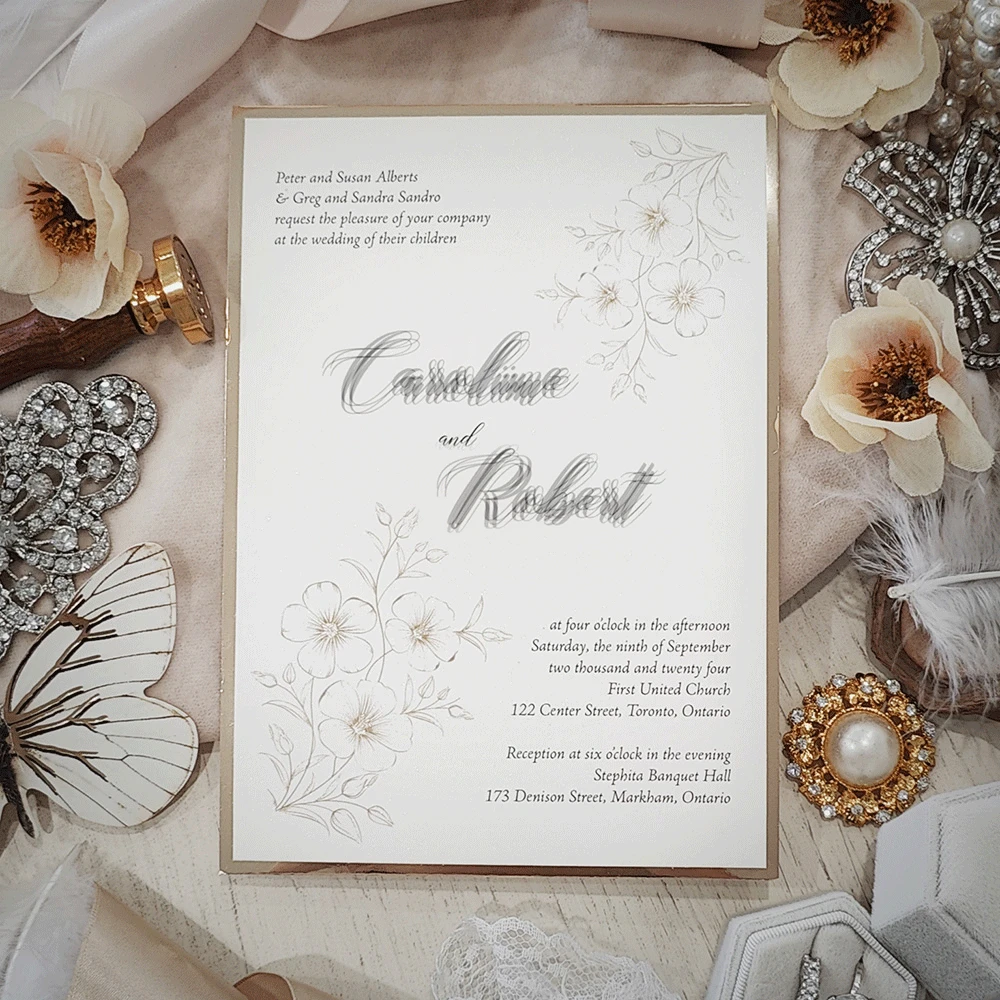
1. Pick a Theme That Matches Your Wedding
Your invitation should look like your wedding. A beach wedding needs a different style than a church wedding. A formal evening party needs a different look than a casual backyard gathering. Start by thinking about your wedding's overall feel. Is it romantic? Modern? Rustic? Fun? Write down three words that describe your wedding. Use those words to guide your design choices.
For a romantic wedding, think soft colors and elegant fonts. For a modern wedding, try clean lines and bold shapes. For a rustic wedding, use natural textures and earth tones. For a fun wedding, add bright colors and playful illustrations. Your invitation is a preview of what guests can expect. Make sure the preview matches the real event. You can look at invitation cards ideas online or in magazines. Collect the ones you like. Notice what they have in common. Use those ideas as a starting point for your own design.
2. Choose a Format That Works for You
Invitations come in many shapes and sizes. A single card is the simplest option. It has all the information on one piece. This format is cheap and easy to mail. A folded card gives you more room. The front has a short message. The inside has all the details. This format feels more formal. A pocket invitation has multiple pieces. You put the main card, RSVP card, and map into a pocket. This format works well for weddings with many events or locations.
Think about your budget and your guest list. A single card works for 200 guests. A pocket invitation works better for 50 guests who expect something special. Also think about the weight of your invitation. Heavier invitations cost more to mail. Pick a format that fits your needs without wasting money. Before you commit to a format, look at invitation cards templates from different sources. Templates show you how each format looks in real life. Pick the format that feels right for your wedding.
3. Write Clear and Helpful Words
The words on your invitation matter a lot. Guests need to know who is getting married. They need to know when and where the wedding is. They need to know how to RSVP. Do not make them guess. Start with the host line. "Together with their families" is a common choice. Then list the couple's names. Use full names for a formal wedding. Use first names only for a casual one.
Then write the request line. "Request the pleasure of your company" is formal. "Would love you to join them" is casual. Then write the date, time, and place. Write the date in full. "Saturday, the fifth of June" is clearer than "6/5". Write the time as "four o'clock in the afternoon" instead of "4:00 PM". Include the full address of the venue. A street address and city are enough for local guests. Out of town guests need the full address with zip code.
Finally, tell guests how to RSVP. Give them a date to reply by. Give them a phone number, email, or a card to mail back. Clear words make happy guests. Confusing words cause problems.
4. Pick a Font That Is Easy to Read
Fonts are the shapes of your letters. A good font looks nice and is easy to read. A bad font is hard to read and looks cheap. Do not choose a fancy font for long text. Save fancy fonts for names and short lines. Use a simple font for addresses and dates.
You can mix two fonts together. Use one font for the couple's names. Use another font for all the other text. Make sure the two fonts look good together. A script font with a simple sans serif font works well. Do not use more than two fonts. Three fonts look messy and unprofessional.
Also think about font size. The couple's names should be the biggest text on the card. The date and venue should be smaller. The RSVP details should be the smallest but still readable. Test your invitation card design by printing one copy. Can you read everything from arm's length? If not, make the text bigger. A good design balances beauty and usability.
5. Select Paper That Feels Good
The paper you choose changes how your invitation feels. Thin paper feels cheap. Thick paper feels valuable. Most wedding invitations use paper between 250 and 350 grams per square meter. This weight feels solid in the hand.
Matte paper has no shine. It feels soft and natural. This works well for rustic or romantic weddings. Glossy paper has a shiny coating. Colors look bright on glossy paper. This works well for modern or fun weddings. Textured paper has a rough surface. It feels special and unique. Linen paper has a fabric-like texture. Cotton paper feels soft and expensive.
Your paper choice should match your theme. A beach wedding could use a textured paper that feels like sand. A formal wedding could use a thick, smooth paper that feels expensive. Ask for invitation cards samples before you decide. Feel each one with your hands. Look at how the colors print on each paper type. Pick the one that makes you smile.
6. Add a Personal Touch
Your invitation is a chance to share a little bit of yourselves. Add something that makes the invitation special. A custom monogram with your initials is a classic choice. A small illustration of your wedding venue works well. A map showing the ceremony and reception locations is very helpful for guests.
You can also add a wax seal to the envelope. A wax seal looks old-fashioned and romantic. You can add a ribbon tied around the card. A ribbon adds color and texture. You can add a vellum wrap over the invitation. Vellum is a thin, see-through paper. It softens the look of the card underneath.
Do not add too many extras. Each extra piece adds weight and cost. Pick one or two personal touches that mean the most to you. Your guests will notice and appreciate the effort.
7. Print a Test Copy First
Never print all your invitations at once. Print one test copy first. Look at it carefully. Check the spelling of every name. Check the date and time. Check the venue address. A small mistake on one invitation becomes a big mistake on 100 invitations.
Show the test copy to a friend. Ask them to read everything out loud. A second pair of eyes catches errors you missed. Then show it to your partner. Get their approval before you print the full batch.
Hold the test copy in your hands. Feel the paper. Check the colors. Make sure the font size is readable. If something looks wrong, fix it. Then print another test copy. Repeat until the invitation looks perfect. This step takes time, but it saves you from embarrassing mistakes.
8. Assemble and Mail on Time
Once your invitations are printed, you need to put them together. If you have multiple pieces, decide the order. The main invitation goes on the bottom. Smaller pieces go on top. Fold everything neatly. Put the stack into the envelope with the main invitation facing up.
Address each envelope by hand or with a printer. Handwritten addresses look personal and warm. Printed addresses look clean and professional. Either choice is fine. Just make sure every address is correct.
Mail your invitations six to eight weeks before the wedding. This gives guests time to make travel plans. For a destination wedding, mail them three to four months early. For a local wedding, eight weeks is plenty of time. Do not mail them too late. Guests need time to reply. Do not mail them too early. Guests might forget or lose the invitation.
Designing your own wedding invitations is a fun and rewarding project. Planning your wedding and need beautiful invitations? Shanghai Yucai Printing Company is here to help. We specialize in high quality wedding invitation printing. We offer many paper options, from matte to glossy to textured. You can choose from single cards, folded cards, or pocket invitations. We also offer premium finishes like foil stamping, embossing, and spot UV. Our team helps you pick the right paper and finish for your theme. Need a test copy first? We can print just one invitation for you to review. No minimum order quantity required. We print exactly what you need, when you need it. Contact Shanghai Yucai Printing today. Get a free quote. Let us help you create invitations that your guests will love and remember.
FAQ
FAQ 1: How many invitations should I order?
A good rule is to order 10 to 20 percent more than you think you need. Count the number of households on your guest list, not the number of guests. One invitation goes to each household. Add extra copies for last-minute additions. Add more for guests you forgot to include. Add extras for your own keepsake and for photos. Also add extras in case you make mistakes while addressing envelopes. It is always better to have a few left over than to run out and order a second batch.
FAQ 2: What is the difference between a digital proof and a physical proof?
A digital proof is a PDF file. The printer sends it to you by email. You can check the layout, spelling, fonts, and colors on your screen. A digital proof is fast and free. However, colors look different on a screen than on paper. A physical proof is a real printed copy of your invitation. The printer mails it to you. You can hold it in your hands. You can feel the paper and see the true colors. A physical proof costs extra and takes more time.
FAQ 3: How should I assemble and mail my invitations?
Start by placing the main invitation face up on a clean surface. Place smaller pieces on top of it in order of size, with the smallest on top. If you have a tissue paper liner, put it over the stack before folding. Insert the stack into the envelope with the main invitation facing the back flap. This way, guests see the main invitation first when they open the envelope. For mailing, take one fully assembled invitation to your local post office. Ask them to weigh it. Check the postage cost.