




How To Choose Custom Mailer Boxes By Product Fit, Not Just Branding
 Nov 17, 2026|
A battered oversized brown box turns a premium product into a damaged return. The right custom mailer protects the item, carries your brand, and avoids wasted freight. This guide walks you through board material, flute choice, and industry fit so you can order with confidence.
The Three Mailer Board Materials
Most mailer boxes fall into three material categories, each with a distinct look, hand feel, and print result. Choosing the right one keeps your branding sharp and consistent without overspending on a finish your product does not need.
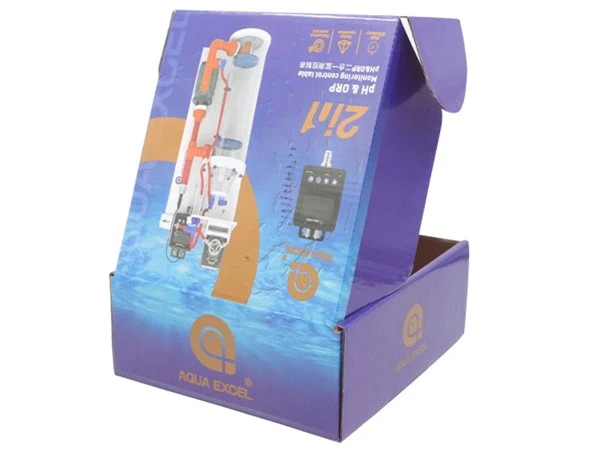
Standard white corrugated
Standard white board is the budget-friendly workhorse. Its matte, slightly absorbent surface softens ink intensity, so colors come through muted and understated rather than loud. It skips heavy bleaching and glossy coatings, which keeps production cost low. This stock suits apparel brands, minimalist aesthetics, and startups that want a clean, professional impression without a premium price tier.
Premium white corrugated
Premium white board is the high-definition canvas. Its bright, smooth surface resists ink absorption, so fine lines stay sharp, gradients blend cleanly, and photographic details reproduce realistically. A satin finish adds a subtle sheen that reads as luxury. This is the stock to choose when the box must look flawless in an unboxing reel, an influencer PR kit, or a premium product line where perceived quality supports your price point.
Kraft brown
Kraft board carries a warm, rustic, organic look. Visible wood fibers naturally soften ink colors, and the surface pairs best with bold black ink or simple illustrations. It retains good tear resistance because it skips heavy chemical processing. Kraft mailers are the standard choice for organic, handmade, and sustainable brands that want their packaging to signal environmental values before the customer sees the product inside.
Match the Material to Your Brand Position
If you want a clean look at the lowest shipping and production cost, standard white is the practical choice. If your box needs to perform on camera and convey luxury, step up to premium white. If your brand identity is built around sustainability and natural materials, kraft sends that signal immediately.
Color performance differs by stock. Standard white and kraft both print in soft matte tones; premium white delivers the most vibrant, color-accurate result. Before bulk production, request a physical proof on your chosen board so you see how your Pantone colors actually render, rather than judging them on a screen.
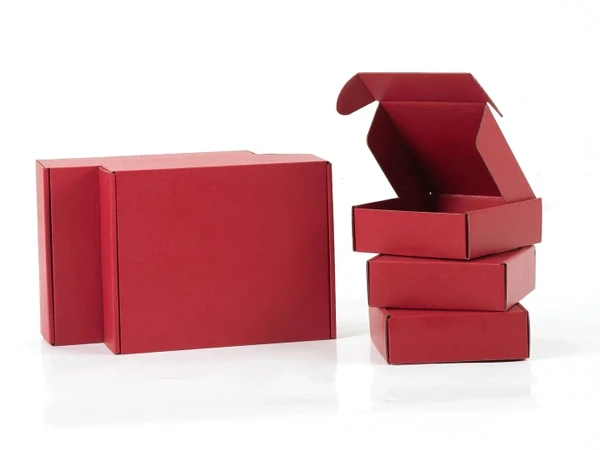
Choose the Right Flute Thickness
The flute inside the corrugated board separates a box that looks good from one that survives transit. Wrong flute thickness either lets the parcel collapse under heavy contents or inflates dimensional weight with unnecessary bulk. Two flute profiles dominate mailer boxes.
E-flute: compact and print-ready
E-flute, about 1/16 inch thick, has tightly packed interior waves that create a smooth outer canvas. High-definition logos and fine text print cleanly on it, and the tight profile folds into a crisp, premium silhouette. Choose E-flute for lightweight products: cosmetics, jewelry, tech accessories, and curated subscription items. The thin board keeps the parcel compact on the shelf and the pallet.
B-flute: cushion and crush resistance
B-flute, about 1/8 inch thick, is roughly double the E-flute profile and acts as an integrated shock absorber. Its deeper flutes resist crushing under rough courier handling and warehouse stacking. It does not reproduce micro-detail artwork as cleanly, but its structural integrity protects fragile or weighty items. Choose B-flute for glass jars, heavy candles, gourmet food kits, and dense multi-item bundles.
When to pick E-flute versus B-flute
Choose E-flute when your product is light and your priority is a camera-ready unboxing with intricate graphics. Choose B-flute when the product is fragile, heavy, or likely to be tossed through rough parcel handling before reaching the doorstep. When both print quality and protection matter, double-wall EB board combines an E-flute face with a B-flute layer.
Which Industries Use Mailer Boxes
Mailer boxes fold together mechanically without packing tape, so they arrive retail-ready straight from the truck. They suit several common direct-to-consumer categories.
Beauty and skincare
Cosmetic brands favor premium white mailers for vibrant color reproduction and crisp brand detailing. The smooth surface supports the clean, clinical look skincare packaging often requires, and it photographs well for social content.
Clothing and apparel
Standard white corrugated keeps apparel fulfillment costs down with a clean, sleek look. Eco-conscious clothing lines choose kraft stock to display their sustainability commitment visually before the garment is seen inside.
Food and beverage
B-flute kraft or white board absorbs shock and supports the weight of dense items. Coffee beans, loose-leaf teas, spice kits, and shelf-stable snack boxes ship better on the thicker flute than on a light E-flute carton.
Subscription services
Kraft or standard white mailers keep recurring packaging cost low while delivering a reliable opening experience. Monthly curated kits-book clubs, coffee subscriptions, grooming sets-pack well in self-locking mailer boxes that open consistently every cycle.
Wellness, organic, and sustainable
Kraft mailers match the natural tone of health and organic products. Minimalist box designs in this segment project authenticity that resonates with eco-conscious buyers.
Mailer Boxes vs. Heavy-Duty Shipping Boxes
A mailer box is a self-locking, single-piece corrugated container built for lightweight direct-to-customer shipments. It closes with tuck flaps and needs no tape. A shipping box is a heavy-duty multi-flute carton that requires packing tape and is engineered for bulk, heavy, or fragile freight.
Do not force a heavy product into a mailer to save cost. If the contents exceed the mailer's board rating, the box will flex and split in transit. For dense or over-weight items, use a taped shipping carton-either as an outer layer around a presentation mailer, or as the primary container.
What Moves the Price of a Custom Mailer
Custom mailer boxes generally run from $0.50 to over $5.00 per unit. The final quote depends on five variables: box dimensions, order quantity, board material, flute profile, and the amount and method of custom printing.
Short digital runs avoid plate fees and suit testing a new design; offset printing brings the per-unit cost down at bulk volumes. Premium white board and specialty finishes add cost over standard white or kraft. Larger dimensions consume more board, which raises the base price before printing is added.
How Yucai Builds Your Custom Mailer
At Yucai, we manufacture self-locking mailer boxes in standard white, premium white, and kraft board, with E-flute for light printed orders and B-flute for denser or fragile products. Every box is built around a die-line fitted to your product, with optional interior printing and fitted inserts for a controlled unboxing.
We support digital printing for short test runs and offset production for bulk orders, with Pantone color matching and matte or satin lamination. All board is FSC-certified with water-based inks. Send us your product measurements, weight, artwork, and monthly volume, and we will recommend the board, flute, and finish that balance brand presentation, transit protection, and per-unit cost.
Frequently Asked Questions
Q: What structural types of mailer boxes exist?
A: Common styles include roll-end front tuck, auto-bottom, and regular slotted container. Each differs in how the base and flaps assemble on the packing line.
Q: What price range should I expect for custom mailer boxes?
A: Typically $0.50 to over $5.00 per unit, driven by box size, order quantity, board material, flute profile, and the printing method used.
Q: What is the difference between a mailer box and a shipping box?
A: A mailer is a self-locking single-piece box for lightweight DTC shipments, no tape needed. A shipping box is a taped heavy-duty carton for bulk, heavy, or fragile freight.
Q: Which board gives the sharpest full-color printing?
A: Premium white corrugated. Its smooth, low-absorption surface keeps fine lines and gradients crisp; standard white and kraft print in softer matte tones.
Q: When should I choose B-flute over E-flute for a mailer?
A: For fragile, heavy, or rough-handled products such as glass jars, heavy candles, and food kits. E-flute suits light products where print quality and a compact profile matter most.
Q: Can I use a mailer box for a heavy product?
A: Only within the board's ECT rating. Dense or over-weight items need a B-flute carton, double-wall board, or a taped outer shipping carton to avoid flexing and splitting.
Q: Is kraft board weaker than white corrugated?
A: No. Kraft board retains good tear resistance through less chemical processing. Its strength depends on liner grade and ECT rating, not its brown color.
Q: Which printing method is cheaper for a first small order?
A: Digital printing, which has no plate fee and suits short test runs. Offset printing lowers the per-unit cost once you move into bulk repeat orders.