




What Are The Working Principle And Technical Parameters Of RFID Labels?
 Nov 17, 2022|
 The working principle of electronic tags
The basic working principle of RFID technology is not complicated: the tag enters the magnetic field, receives the radio frequency signal from the decoder, and sends out the product information stored in the chip (PassiveTag) by virtue of the energy obtained from the induction current, or actively sends a signal of a certain frequency (ActiveTag); the decoder reads the information and decodes it, and then sends it to the central information system for relevant Data processing.
RFID (radio frequency identification) system consists of two parts: reading/writing unit and electronic transceiver. The reader sends out electromagnetic pulses through the antenna, the transceiver receives these pulses and sends the stored information to the reader as a response. In effect, this is a non-contact read, write or delete process of the data in the memory.

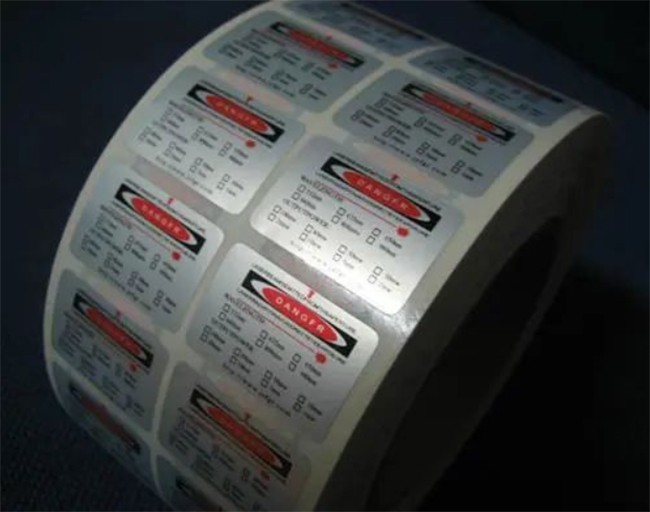
Technically speaking, the "smart tag" contains an RFID circuit that includes an RFID chip with an RFID radio frequency part and a thin antenna loop, which is embedded in the tag together with a plastic sheet. Usually, a paper label is glued to this tag, and some important information can be clearly printed on the paper label. Current smart tags are generally the size of a credit card, and for small shipments there are also 4.5 x 4.5 cm size tags, as well as round tags with a diameter of 4.7 cm used on CDs and DVDs.
The advantage of transceiver technology compared to other ID technologies like barcodes or magnetic stripes is the wireless link between reader and transceiver: the read/write unit does not require visual contact with the transceiver and can therefore be fully integrated into the product. This means that the transceiver is suitable for harsh environments and that the transceiver is insensitive to moisture, dirt and mechanical influences. Thus, the transceiver system offers very high reliability, fast data acquisition and, last but not least, labor and paper savings.
What are the technical parameters of the electronic label?
The technical parameters of the electronic label are mainly the energy requirement of the label activation, the read/write speed of the label information, the transmission rate of the label information, the capacity of the label information, the package size of the label, the read/write distance of the label, the reliability of the label, the working frequency of the label and the price of the label, etc.
1. The energy requirement of the label activation
When the electronic label enters the read-write work area, receives the read-write to issue the radio frequency signal excitation, the label enters the work state. The label activation energy refers to activates the electronic label chip circuit the energy range which needs, this request electronic label and the read-write in the certain distance, the read-write can provide the electronic label sufficient radio frequency field strength.
2. The read-write speed of the label information
The read-write speed of the label includes the read-out speed and the write speed, the read-out speed refers to the electronic label is read-write read speed, the write speed refers to the electronic label information write speed, the general requirement label information read-write for millisecond level.
3. The package size of the label
Label package size mainly depends on the size of the antenna and power supply, etc., in different occasions have different requirements for the package size, the package size is small for millimeter level, large for centimeter level.
If the size of the electronic label is small, it has a wide range of application, regardless of large items or small items can be set. However, the pursuit of size is small and is not good, if the electronic label design is relatively large, can increase the size of the antenna, therefore can effectively improve the electronic label read rate.
4. The capacity of the label information
The capacity of the label information refers to the electronic label carries the amount of memory available for writing data. Label information capacity size, and electronic label is "front" type or "backstage" type related.
(1) "Backstage" type electronic label
The "backstage" type electronic label through the read-write collects the data, then can use the network and the computer database connection, therefore generally speaking, as long as the electronic label memory has more than 200 (bit), will be able to accommodate the item code. If needs the item more detailed information, this kind of electronic label needs through the background database to provide.
(2) "Front desk" type electronic label
In practice, the site is sometimes not easy to database on-line, which must increase the amount of memory of the electronic label, such as increased to several thousand bits to tens of thousands of bits, so that the electronic label can be used independently, do not have to check the database information, this electronic label can be called "front" type electronic label. But in the choice of "foreground" type electronic label to pay attention to, generally speaking the larger the memory reads the longer the time, only in those time factors are not very important, but must then know the item more detailed information, only use this kind of electronic label.

5. The alignment distance of the label
The read-write distance of the label refers to the working distance of the label and the reader. The read-write distance of the label, near the millimeter level, far up to 20 meters or more. In addition, most of the system read distance and write distance is different, write distance is about 40% to 80% of the read distance.
6. The transmission rate of the tag information
The transmission rate of the label information includes two aspects, on the one hand is the electronic label to read-write feedback data transmission rate, on the other hand is from the read-write write data rate.
7. The working frequency of the label
The working frequency of the label refers to the frequency used when the label works, can be low frequency, high frequency, ultra-high frequency and microwave.
8. The reliability of the label
The reliability of the label and the label working environment, size, material, quality, label and read-write distance and so on. For example, when on the conveyor belt, when the label is exposed and is read individually, the accuracy of reading is close to 100%. But many factors may reduce the reliability of the tag read and write, once at the same time read the more tags, the faster the movement of the tag, the more likely to appear misread or miss read.
In a project application of the survey shows that when using 10000 electronic tags, 60 electronic tags in a year by the damage, by the damage of the proportion of less than 0.1%, in order to prevent the damage of the electronic tags and the inconvenience caused by the bar code and electronic tags at the same time is an effective remedy, so that you can quickly copy an electronic tag according to the information recorded in the bar code. In addition, an item to put two electronic labels in case is also a method, but will make the whole project cost higher.