




What Is A Sticker? How To Know Well Sticker?
 Aug 29, 2025|
What is a sticker?
Stickers are materials with adhesive backing, usually made of paper, plastic, vinyl or other substrates, and are designed to be adhered to surfaces such as paper, glass, metal, plastic or fabric. It is usually characterized by printed designs, images, text or patterns, and is used for decoration, labels, branding or personal expression. Stickers come in countless shapes, sizes and surface treatments, making them versatile for both personal and commercial use - from adding style to laptops to marking products in retail Settings.
In terms of design, stickers can almost incorporate any visual elements imaginable. This includes printed images (such as cartoons, landscapes or portraits), patterns (stripes, dots or abstract designs), text (quotes, slogans or names), logos, and even custom artworks. They can be cut into standard shapes (circles, squares, rectangles), or they can be cut into unique custom shapes through processes such as die-cutting. During the die-cutting process, the stickers are trimmed to precisely match their designed Outlines, enhancing their visual appeal.
From the material: Vinyl or Paper.
Vinyl stickers: Made of durable vinyl, they are waterproof, anti-scratch and suitable for outdoor use (for example, car labels, outdoor signs). They can withstand sunlight, rain and temperature changes better than paper. Most of people choose vinyl stickers because durable, water-resistant, and fade-resistant, suitable for both indoor and outdoor use.
Paper stickers: These are cost-effective and are typically used for indoor purposes, such as scrapbooks, greeting cards or temporary labels. They are not waterproof, also call door stickers, so if exposed to moisture, they may get dirty or deteriorate.Usually, our customers choose to cover the paper surface with a film, which can also provide a certain degree of protection.
In short, when making a choice, if durability is the top priority, then lean towards vinyl stickers - whether you need them to withstand rain, sunlight, or frequent operation in outdoor environments such as vehicles or gardening tools, or if you are looking for a long-term solution that can maintain their appearance for months or even years. On the other hand, when price is the key factor, paper stickers are a better choice, such as for a large number of giveaways during events, or when you need some temporary indoor items, like decorating school term notebooks, or adding highlights to party venues

From die cut: individual die Cut and normal die cut
Individual die-cut stickers are stickers whose cutting process follows the exact contour of the design. This means that the sticker itself is cut to match the shape of the artwork, logo or image, with no extra material around the edge. It is usually some cartoon characters, which are very popular among children, if customers say kid stickers that usually means individual die cut stickers. Cutting involves using a sharp mold (a custom metal blade) to cut the sticker material and the back, in order to forming a completely independent and uniquely shaped sticker.
The normal die cut stickers adopts a different cutting technique. Cut through the top layer but leave the backing paper intact, allowing for additional information or design elements around the sticker.
In this case, die-cutting is only done by adhering the material (top layer), but not by the backing paper. This enables the sticker to adhere to a larger backing material, with the cutting following the designed outline. The result is that the sticker can be easily peeled off from the back, while the back remains in its complete standard shape (usually square or rectangular).
To sum up, individual die-cut stickers are all about custom shapes and bold visual impact, while normal die cut stickers balance custom design with convenient backing paper. The choice between them depends on whether you prioritize the uniqueness of the sticker shape or the practicality of handling and storing the stickers.


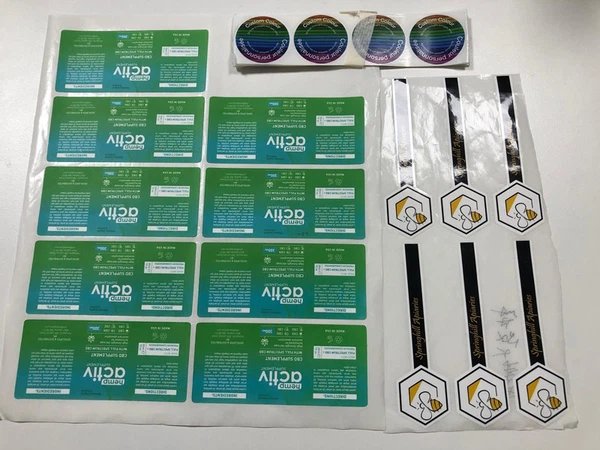
From Packaging: in roll and in sheet
Packaging in roll refers to a form of packaging in which products are wound around cylindrical cores to form continuous rolls. Depending on the product type and usage requirements, the length of the roll can vary greatly, ranging from a few meters to hundreds of meters. This packaging method is typically used for products that require continuous or large-scale application, as it allows for effective entry into automated machinery.
For instance, the transportation labels used in logistics centers are usually in roll packaging. These volumes can be loaded into label printers or applications, enabling continuous printing and application of labels to packaging without frequent manual intervention. Roll packaging also helps protect the adhesive surface of the product, as the layers are neatly wound to prevent dust, dirt, or damage to the adhesive surface.
Packaging in sheet refers to the product being cut into individual flat sheets, each with a certain number of stickers or labels arranged in a grid or specific pattern. These sheets are usually stacked together, wrapped up or placed in a box for storage and transportation. The size of the paper is usually standardized (such as A4, letter size or custom size) to meet the needs of ordinary printers, cutters or manual processing.
A common example is these stickers sold in craft stores. They are usually arranged on a rectangular sheet of paper, with multiple designs on each sheet. Users can easily tear off individual stickers from the paper as needed. Single sheet packaging is also widely used for labels that require manual application or desktop printer printing, as single sheet packaging can be conveniently sent to standard printers for customization.

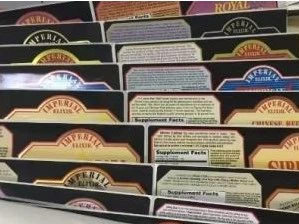
From purpose: Stickers and Labels
A label is a material with an adhesive backing (usually paper, vinyl or synthetic film),seems like stickers in many aspects.For most people, these two concepts seem quite confusing. The materials can be the same, but the key difference lies in their uses. Labels are mainly used in commercial solutions to highlight your brand identity, while stickers are more often used for promotions and personal purposes.They are primarily used for identification or information on products or packaging, often coming in rolls. So although both self-adhesive stickers and labels are adhesive materials, stickers are mainly decorative or expressive, while labels are functional and information-driven. Their differences in application, design and materials make them suitable for different use cases.
In conclusion, stickers thrive in creative, expressive or promotional environments where visual effects drive their purpose. At the same time, labels are the main force for organization, compliance and communication, among which clear and sustained information transmission is the key. Understanding this difference helps in choosing the right tools: use stickers to add personality or spread casual information, and use labels when you need to inform, identify or ensure the clarity of functional Settings.


In a word, you can choose the stickers from various aspects. First, clarify the usage scenario and purpose, and match the size and style. Next, let's take a look at the material - vinyl durable and waterproof while paper stickers are typically used for indoor purposes. Then just please share your size and qty, we will quote for you.