




Hardcover Books: The Premium Choice That Sells Itself
 Apr 28, 2026|
In a market flooded with digital content and low-cost paperbacks, hardcover remains a distinct and profitable format. It commands attention on shelves. It signals quality to customers. It justifies premium pricing. For publishers, brands, self-published authors, Amazon sellers, and corporate buyers, choosing hardcover is not just a production decision-it is a strategic business move. This article explains why hardcover sells itself, what makes it commercially superior, and which of these clients benefit most.
1. Why Hardcover Commands Attention
In retail, first impressions drive conversion. Hardcover delivers that advantage instantly.
Hardcover books stand out because they look and feel different. The rigid cover, the weight, the sturdy spine-these details signal importance. Whether displayed on a bookstore table, used as a corporate gift, or unboxed by an online customer, hardcover captures attention immediately. That first impression often determines whether a customer picks up the product or walks past it. Hardcover ensures they stop.

2. The Perceived Value of Hardcover
Customers pay for perceived value. Hardcover delivers a higher perception without a longer sales pitch.
When end users see a hardcover book, they instinctively assign higher value to it. It feels more substantial, more permanent, and more worth their money. This perception is backed by decades of market behavior. Hardcover has long been associated with libraries, awards, and classic literature. For B2B clients-whether publishers, corporate buyers, or retailers-this translates directly into higher price points, stronger margins, and improved customer loyalty. A hardcover book does not need explanation. It communicates value on its own.
3. Key Advantages of Hardcover Books
Below are five concrete commercial advantages that make hardcover the preferred choice for B2B buyers.
(1) Durability and Longevity
Hardcover books are built to last. The rigid cover protects pages from bending and tearing. The binding is stronger, ensuring the book remains intact after years of use. For B2B clients-libraries, schools, corporate archives-this durability means fewer replacements and lower long-term costs. For publishers, it means fewer customer complaints and returns. Durability is not just a feature. It is a cost-saving benefit.

(2) Premium Aesthetic and Shelf Appeal
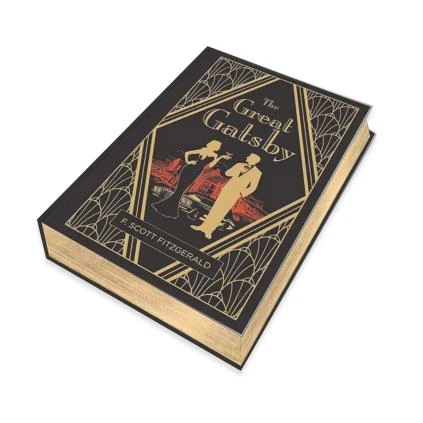
Hardcover offers design options that paperback cannot match. Books stand upright without sagging. Covers can feature foil stamping, embossing, debossing, spot gloss, and other high-end finishes. Dust jackets add an extra branding layer. When customers browse a shelf, hardcover catches the eye first. For brands using custom books as marketing tools, that visual impact drives engagement and sales.

(3) Higher Perceived Value Equals Higher Price Point
Because customers see hardcover as more valuable, they accept higher prices. A typical hardcover can be priced 50–100% above its paperback equivalent. That higher price does not deter buyers-it reinforces quality perception. For publishers and self-published authors, this means better margins per unit. For corporate buyers, a hardcover book feels like a premium gift, not a cheap promotional item. Higher price becomes a feature, not a barrier.
(4) Better Reading Experience for Premium Segments
Hardcover provides a superior user experience. Pages lay flatter, making two-page spreads easier to view. Paper quality is typically higher. The weight and texture create satisfaction. For art books, photography books, cookbooks, and children's books, these details directly impact customer reviews and repeat purchases. A better experience leads to stronger word-of-mouth and higher lifetime customer value.

(5) Ideal for Special Editions and Corporate Gifting
Hardcover is the standard format for books meant to be kept and cherished. Anniversary editions, signed copies, collector's sets, and limited runs almost always use hardcover. For corporate clients, hardcover books serve as high-end client gifts, employee recognition awards, and event giveaways. Offering a hardcover version creates a premium product tier that captures higher-value customer segments.
4. Who Should Choose Hardcover?
Hardcover is not for every book. But for these B2B segments, it is a proven commercial decision.
(1)Publishers – Hardcover works best for debut novels, award contenders, illustrated books, and library-bound titles. It establishes a book as important before any reviews are written.
(2)Brands and Corporations – Custom hardcover books make exceptional client gifts, employee awards, and promotional tools. They communicate quality and thoughtfulness at scale.
(3)Self-Published Authors – A hardcover edition elevates professional credibility. It allows authors to sell at higher price points and reach customers who prefer physical books for personal libraries.
(4)Gift and Specialty Retailers – Hardcover books perform well in gift shops, museum stores, and holiday markets. Their perceived value matches gift-buyer expectations.
(5)Amazon Sellers and E-commerce Operators – Hardcover offers differentiation in crowded categories. For cookbooks, children's books, and gift-oriented titles, hardcover often drives higher conversion and better reviews.

5. Conclusion
Hardcover books are not an outdated format. They are a distinct product category-offering durability, visual impact, premium pricing power, and a superior user experience. For B2B clients, choosing hardcover signals quality and value. Customers understand that message instantly. That is why hardcover sells itself. When you are ready to produce hardcover books that deliver, choose Yucai-your trusted partner for quality printing at competitive prices.
FAQ
1. What is the typical price difference between hardcover and paperback for B2B bulk orders?
Hardcover typically costs 30–50% more to produce than paperback in bulk quantities, depending on page count, paper quality, and cover finishes. However, the retail price can be set 50–100% higher, delivering stronger margins per unit.
2. What is the minimum order quantity for hardcover books?
Minimums vary by printer. Digital print-on-demand services offer quantities as low as one copy. Offset printing typically requires 500–1,000 copies for cost-effective per-unit pricing. Many B2B printers now offer short-run hardcover options starting at 100 units.
3. Which book categories deliver the highest ROI for hardcover?
Cookbooks, art and photography books, children's picture books, memoirs, and limited editions consistently deliver the highest ROI. These categories benefit most from hardcover's visual and tactile advantages.
4. Can hardcover covers be customized with branded finishes?
Yes. Common options include foil stamping (gold, silver, custom colors), embossing, debossing, spot UV gloss, matte lamination, and printed dust jackets. These finishes increase perceived value and justify premium pricing.
5. How does hardcover affect shipping costs for B2B orders?
Hardcover books are heavier and bulkier than paperbacks, increasing both weight-based and dimension-based shipping costs. B2B buyers should factor this into logistics planning. Some printers offer lightweight hardcover board options to reduce shipping expenses.
6. Do hardcover books sell well on Amazon compared to paperback?
Category dependent. For children's books, cookbooks, coffee table books, and gift-oriented titles, hardcover often performs very well. For mass-market fiction, paperback typically dominates. Many successful Amazon sellers offer both formats to capture different customer segments and maximize overall sales.