




Custom Paper Bags: How To Get The Best Value For Your Budget
 May 28, 2026|
You want custom paper bags that look good, hold up well, and do not blow your budget. But with so many options-different paper weights, handle types, printing methods, and finishes-it is easy to overspend on things that do not matter or underspend on things that do. This guide helps you understand where your money goes, where you can save, and how to get the best value for every dollar you spend on custom paper bags.
Custom Paper Bags: Where Your Money Goes
Before you can spend wisely, you need to know what you are paying for. The total cost of a custom paper bag is made up of several components.
1) Paper material. This is usually the largest cost. Heavier paper costs more per bag. Specialty paper like textured, recycled, or coated stock also adds to the price.
2) Printing. The number of colors, the printing method, and the coverage area all affect cost. A one-color logo on one side costs much less than a full-color design printed on both sides.
3) Handles. Twisted paper handles are more expensive than die-cut handles. Rope or fabric handles cost even more but offer a premium feel.
4) Finishing and coatings. Lamination, foil stamping, embossing, or spot UV are optional add-ons that increase both cost and perceived value.
5) Order quantity. Higher quantities lower the per-unit cost but require more upfront investment.
6) Shipping and logistics. Weight, size, and delivery distance all factor into shipping costs. Rush orders cost extra.
Understanding these six components is the first step to making smart budget decisions.
Where to Spend More vs. Where to Save
Not every part of your custom paper bag needs to be premium. Knowing where to invest and where to cut back helps you get the best value.
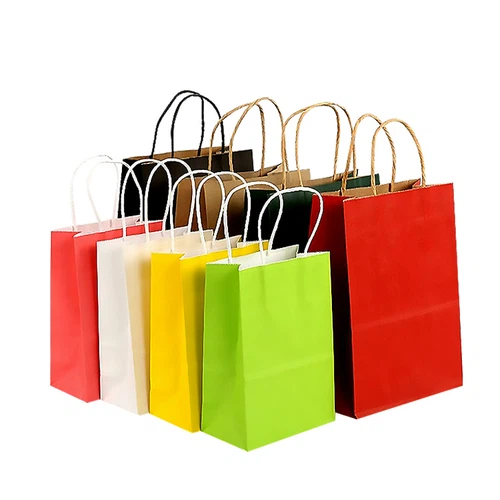
Spend more on the parts your customer touches first. The handle and the bag's overall sturdiness are what customers notice immediately. A bag that feels cheap or a handle that breaks on the way to the car will hurt your brand. Invest in a reliable handle and a paper weight appropriate for your products.
Save on complex printing if your design is simple. A clean, one-color logo on a kraft bag can look great and cost significantly less than a full-color, edge-to-edge print. If your brand identity works with simple designs, take advantage of that.
Spend more on coating if your bags face moisture or grease. For food businesses or outdoor events, a coated or laminated bag protects the product and prevents embarrassing failures. In dry retail environments, skip the coating and save the money.
Save on custom sizes if a standard size works. Standard bag sizes are cheaper because suppliers run them regularly. Custom dimensions require special setup and cutting, which adds to the cost. If your product fits a standard size, use it.
Spend more on samples before committing to a large order. Paying for a physical sample is a small investment that can prevent a costly mistake. A sample reveals paper feel, handle strength, and color accuracy that no digital proof can show.
Save on rush production by planning ahead. Rush fees can increase your total cost by 20–50%. If you can plan your order four to six weeks in advance, you avoid these fees entirely.
Choosing the Right Printing Method for Your Order Quantity
The quantity you order should drive your printing method choice. Using the wrong method means paying too much per bag or waiting too long for delivery.
For small orders (100–500 bags): Choose digital printing.
Digital printing has no setup fees, low minimums, and fast turnaround. The per-unit cost is higher than bulk methods, but you are not paying for plates or expensive setup. Digital is ideal for testing new designs, seasonal promotions, or businesses with low volume.
For medium orders (500–5,000 bags): Consider offset printing.
Offset printing requires plate setup, which adds to the upfront cost. However, the per-unit price drops significantly once the setup is paid for. For orders above 500 bags, offset often becomes more economical than digital. The print quality is also sharper and more consistent.
For large orders (5,000+ bags): Flexographic printing is your best bet.
Flexography has the highest setup cost but the lowest per-unit price at scale. Once the plates are made, the press runs very fast, driving down the cost per bag. If you need tens of thousands of bags and your design will not change for a long time, flexo offers the best value.
Balancing Quality and Budget: Three Real Scenarios
Every business has different priorities. Here is how three different types of buyers might balance quality and budget.
Scenario 1: A small coffee shop launching branded takeout bags.
- Budget is tight. Volume is low (500 bags per month).
- What they spend on: Durable handle, grease-resistant coating (because coffee cups can leak).
- What they save on: Single-color logo, standard size, no fancy finishes.
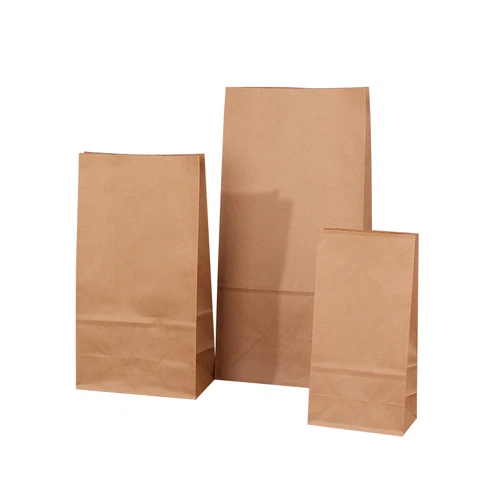
- Best choice: Digital printing on coated kraft paper, twisted paper handles.
- Result: Affordable, functional, and professional enough for daily use.
Scenario 2: A clothing boutique preparing for holiday season.
- Volume is medium (3,000 bags). Brand image matters. Customers will carry these bags on the street.
- What they spend on: Heavyweight paper (150 gsm), full-color logo, matte finish for a premium feel.
- What they save on: Standard size, no foil or embossing, rope handles instead of fabric.
- Best choice: Offset printing on coated matte paper, rope handles.
- Result: A bag that looks expensive without the highest-end price tag.
Scenario 3: A luxury gift brand producing limited-edition holiday packaging.
- Volume is low (1,000 bags). Perceived quality is everything. Customers pay premium prices.
- What they spend on: Textured specialty paper, foil stamping, ribbon handles, custom size.
- What they save on: Nothing-every detail is part of the experience.
- Best choice: Offset or screen printing with foil stamping and embossing.
- Result: A memorable unboxing that justifies the product's high price.
Each scenario shows a different balance. Your job is to find where your business fits.
Hidden Costs You Might Be Overlooking
Even experienced buyers sometimes forget these less obvious expenses.
1) Sample costs. Some suppliers charge for samples plus shipping. Others offer free samples but charge shipping. Factor this into your evaluation. A small sample fee is worth paying to avoid a bad batch.
2) Plate or die fees. Offset and flexo printing require plates or dies. These are one-time setup fees that can range from $50 to several hundred dollars depending on complexity. Always ask if the quoted price includes these fees or if they are separate.
3) Storage. If you order a year's worth of bags at once, where will you keep them? Humidity can damage paper bags. Heat can weaken glued handles. If you do not have climate-controlled storage, ordering smaller quantities more frequently may be wiser even if the per-unit cost is slightly higher.
4) Overweight shipping. Heavier paper and additional coatings add weight. A bag that weighs 20 grams more may not seem like much, but multiplied by 5,000 bags, that is an extra 100 kilograms of shipping weight. The cost adds up.
5) Rush shipping. Air freight for a rush order can cost three to five times more than sea freight. If your timeline is tight, ask about partial shipments-air shipping a small first batch while the rest comes by sea.
6) Design revisions. Some suppliers include a certain number of free design proofs. Others charge for each revision after the first two. Clarify this upfront if you expect design changes.
Conclusion: Spend Smart, Bag Right
Getting the best value from custom paper bags is not about choosing the cheapest option. It is about spending on what matters to your customers and your brand, while saving on things that do not. Understand your costs. Know where to invest and where to cut. Match your printing method to your order quantity. Watch out for hidden expenses. And always ask suppliers the right questions before you commit.
When you spend smart, every bag you hand to a customer builds your brand without breaking your budget. And when you are ready to order, Yucai is here to help-from paper selection to printing to delivery. Contact us for samples, a detailed quote, or a consultation on how to get the best value for your custom paper bags.
FAQ
1. Is digital printing always more expensive than offset?
No. Digital has no setup fees, so it is cheaper for small orders (under 500 bags). Offset becomes cheaper per unit once you exceed 500–1,000 bags because the setup cost is spread across more units.
2. What paper weight gives the best balance of cost and quality?
For most retail applications, 120–150 gsm offers a good balance. It feels sturdy enough for everyday use without the cost of heavyweight paper.
3. Can I mix different bag designs in one order to save money?
Usually no. Each design requires separate plates or digital setup. However, some digital printers allow variable data printing, where you can change small elements like text while keeping the main design the same.
4. How much can I save by choosing die-cut handles over twisted handles?
Die-cut handles are the cheapest option, often saving 10–20% compared to twisted paper handles. However, they are only suitable for lightweight items. Heavier products need stronger handles.
5. What is the most common hidden cost buyers miss?
Plate and die fees. Many buyers compare per-unit prices without realizing that offset and flexo quotes often exclude these one-time setup fees. Always ask for an all-inclusive price.
6. How many samples should I order before approving production?
Order at least one sample of each bag size and design you plan to produce. If possible, order two or three so you can test them under real conditions-loading with products, carrying around, even exposing to humidity.